
Gentle, child-friendly dental care helps children build healthy habits early and feel at ease at the dentist. Check-ups, prevention and treatment for children are available across our five Hong Kong clinics.
Why children’s dental visits matter
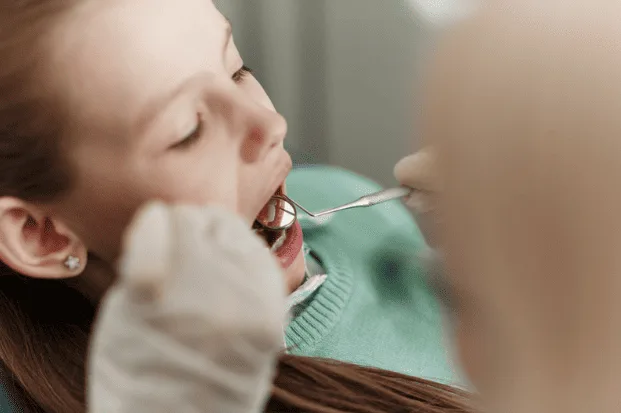
Starting dental visits early helps children stay cavity-free and grow up comfortable with the dentist. Regular check-ups let us watch how the baby and adult teeth are developing, catch small problems before they cause pain, and give parents practical advice on brushing, diet and habits such as thumb-sucking.
What we offer for children
- Check-ups and cleaning: gentle examinations and a clean, with plenty of encouragement.
- Prevention: fissure sealants (protective coatings on the biting surfaces) and fluoride to reduce the risk of decay.
- Fillings and simple treatment: tooth-coloured, mercury-free restorations when needed.
- Guidance: advice on brushing, diet and habits, and monitoring how the teeth and jaws are developing.
Helping your child feel at ease
A calm, unhurried, friendly approach helps children feel safe. We explain things in simple words, take our time, and build up trust visit by visit. For nervous children, gentle options can be discussed — see dentistry under sedation.
When should my child first see a dentist?
As a general guide, it is good for children to see a dentist while they are young — early visits are mostly about getting familiar and checking that development is on track. Bringing your child along to your own check-ups can also help them get used to the clinic.
Your child’s teeth, age by age: answers for parents
Short answers to the questions our dentists hear from parents across our five Hong Kong clinics, arranged by age with an illustration for each.
Toddlers (0–3): first teeth and first brushing
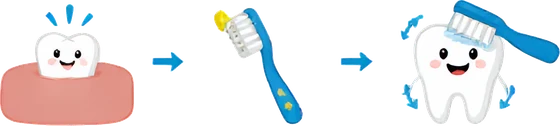
How soon should a baby’s teeth be brushed?
From the day the first tooth appears. A small, soft-bristled toothbrush made for children is enough; brush gently over the front, back and chewing surfaces.
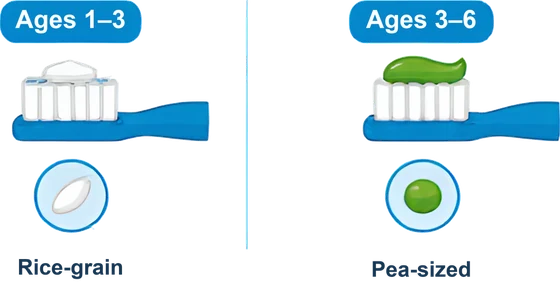
How much fluoride toothpaste does a young child need?
A smear the size of a grain of rice from age 1 to 3, rising to a pea-sized amount from 3 to 6. Fluoride toothpaste is recommended for young children because it helps prevent decay; encourage them to spit out what’s left.
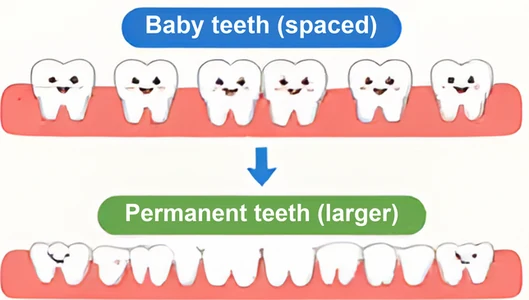
Should I worry about spaces between my toddler’s teeth?
Usually not. Spacing between baby teeth is normal and a good sign: adult teeth are bigger, and those spaces give them room to come in.
Pre-school (3–6): habits, snacks and space
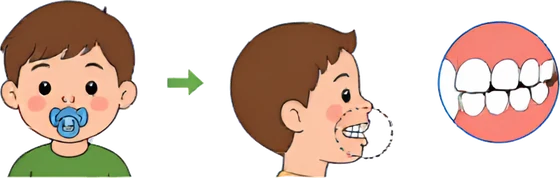
At what age should thumb-sucking or dummy use stop?
Many children give these habits up by themselves somewhere between 2 and 4. If they continue beyond age 4, they can influence how the jaw grows and how the teeth line up, for example upper front teeth that push forward, so aim to wean your child off before then.

Do gummy vitamins and fruit juice harm children’s teeth?
They can. Sticky, sugary foods and drinks stay on the teeth, giving bacteria time to turn the sugar into acid, and that acid makes decay much more likely.
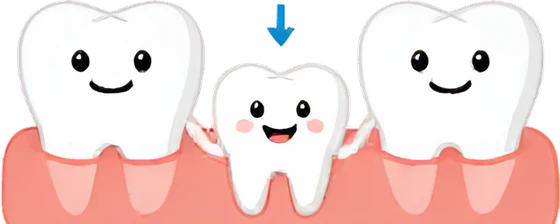
If baby teeth are replaced anyway, why look after them?
Children need them for chewing and clear speech, and each one keeps a space open for the adult tooth that follows. If one is lost too soon, the adult teeth may come in crowded or out of line.
School age (6+): adult teeth and bite checks
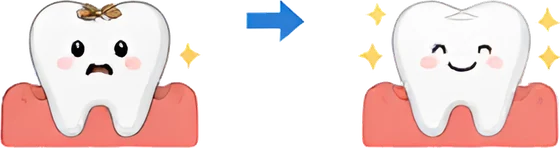
Does my child need fissure sealants?
Sealants are a thin protective layer painted into the deep grooves on the chewing surfaces of back teeth, so food can’t lodge there and start decay. Dentists usually suggest them once the first permanent molars erupt, at about 6 years old.

Why is an adult tooth growing in behind a baby tooth?
This double row, often nicknamed “shark teeth”, happens quite often. In most cases the adult tooth shifts into position on its own. If the baby tooth stays put, have a dentist check whether it should be taken out.

When should my child have a first orthodontic assessment?
Around age 7 is the guideline from the American Association of Orthodontists. By then a dentist can see how the jaws are developing and spot any bite issues while they are still easy to monitor.
Information provided by the dentists at Diestel Dental Group
Booking at your nearest clinic
Child-friendly dental care is available across our five Hong Kong clinics. Our dentists speak English, Cantonese, Mandarin and other languages. Choose the location most convenient for you:
- Central — Smith & Jain, and Diestel & PartnersClinic websites: Smith & Jain children’s dentistry · Diestel & Partners children’s dentistry
- Tung Chung — Bayside DentalClinic website: Bayside Dental Tung Chung children’s dentistry
- Discovery Bay — Bayside Dental (North Plaza & Main Plaza)Clinic website: Bayside Dental Discovery Bay children’s dentistry
Frequently asked questions
When should my child first see a dentist?
How often should children have a check-up?
What are fissure sealants?
Are children’s fillings safe?
My child is nervous — can you help?
Should I bring my child to my own appointments?
Book your child’s check-up at your nearest Hong Kong clinic.