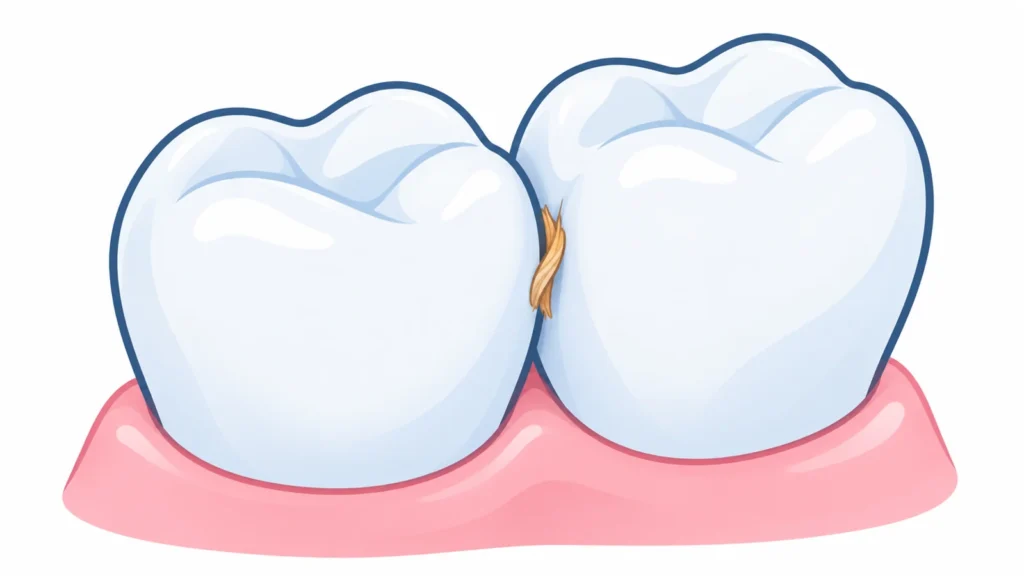
Food that repeatedly gets stuck in the same gap is worth a dental check. The contact between teeth, a filling or crown, the gum and the bite may all play a part. Rinse first. Only try gentle cleaning if the area is comfortable and floss passes easily.
Cover: Illustration, not a clinical photo.
Check whether you need help first
- Get emergency help immediately if swelling in the mouth or neck affects breathing, swallowing or speaking. Go to an emergency department or call 999 in Hong Kong.
- Contact a dentist promptly for worsening pain, a swollen cheek or jaw, or fever. See the group’s emergency dental arrangements for clinic contact details.
- Arrange a dental check if the same gap repeatedly traps food, food will not come out, or pain or bleeding continues after cleaning. Repeated trapping is worth checking even when removal brings temporary relief.
What to do when food is stuck between your teeth
Rinse with water to loosen food. If the tooth or gum is already painful, contact a dentist for advice before trying to floss there.
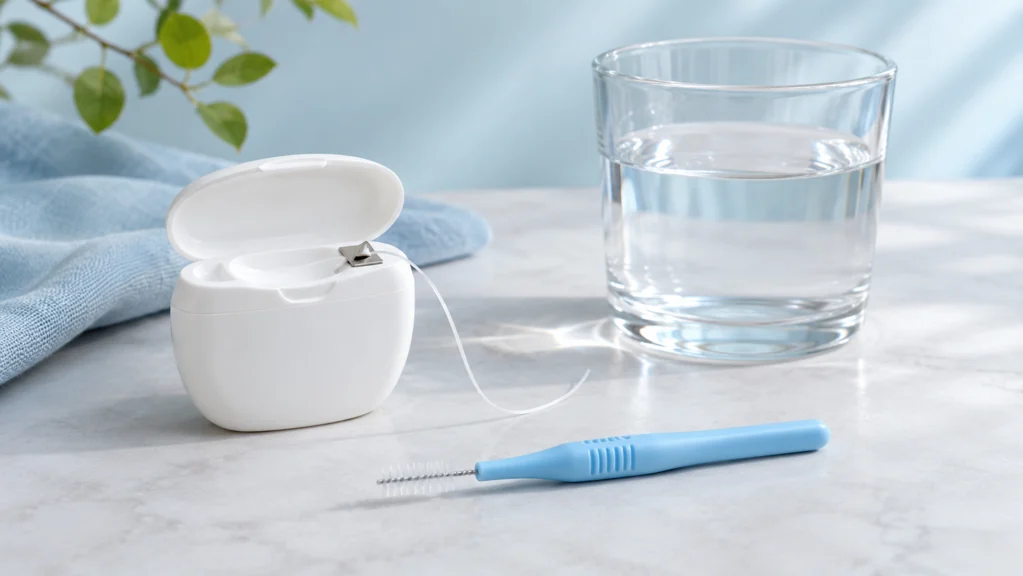
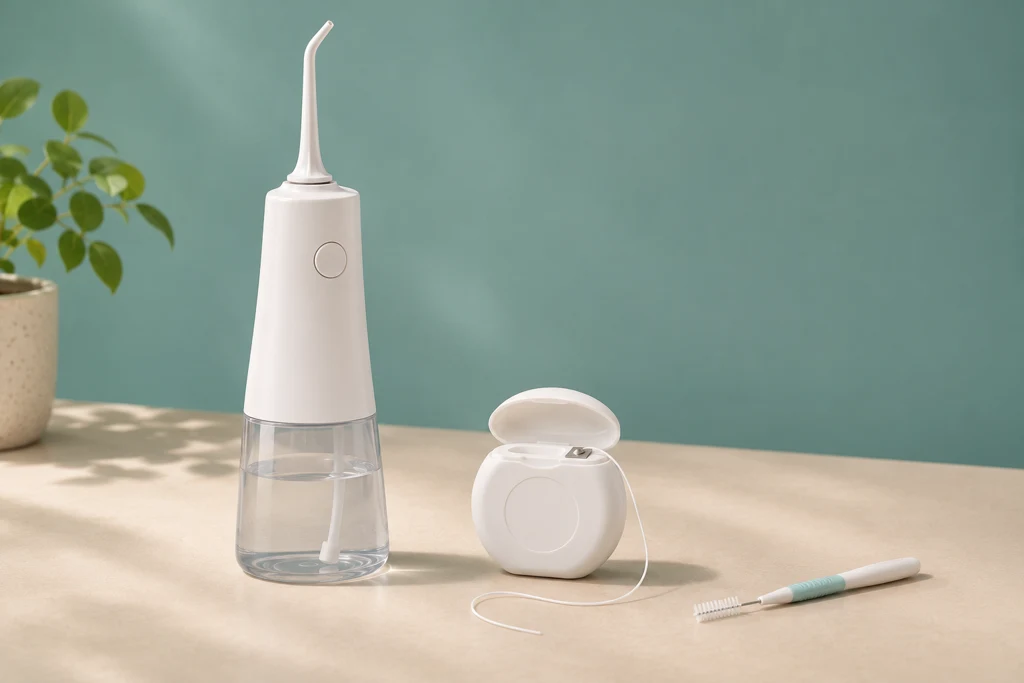
If the area feels comfortable and floss passes without force, guide it slowly between the teeth. Ease it through the point where the teeth touch, then curve it into a C shape against one tooth. Move it gently along that surface and repeat against the neighbouring tooth. Use a clean section of floss for the next gap. Avoid snapping the floss down into the gum.
For a wider space, a suitably sized interdental brush may be easier to use. The bristles should reach the sides of the teeth, and the brush should pass without force. A dentist or registered dental hygienist can help you select a size and show you how to reach the back teeth.
Stop trying at that spot if floss catches, will not pass, or makes pain or bleeding worse. Contact your dentist if the food remains lodged. Avoid needles, sharp tools and fingernails, and leave adjustments to a filling or crown to the dentist.
Why food keeps lodging in the same gap
Food can be pressed between teeth as you chew. Dentists call this food impaction. The contact between neighbouring teeth, the shape of their chewing surfaces and the gum around them all affect where food goes.
The contact between neighbouring teeth has changed
Tooth movement, wear or a change near a missing tooth can alter the contact between adjacent teeth. Food may then be pressed towards the gum during chewing. The bite can also matter when there is no visibly wide gap.
A filling, crown or area of decay provides a place for food to catch
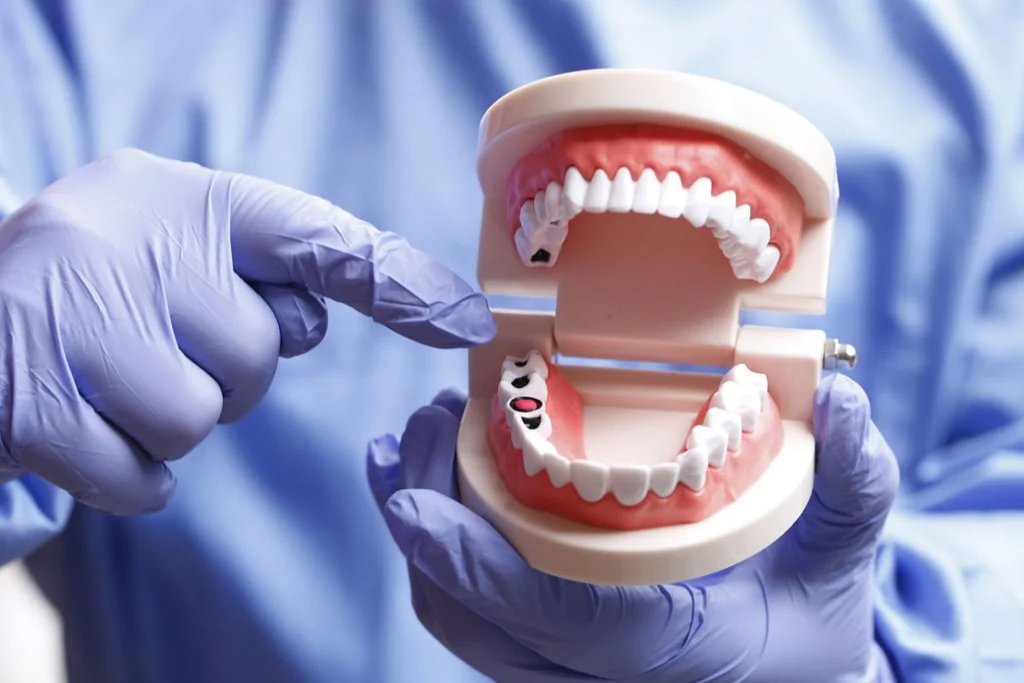
The contour of a filling or crown and its contact with the next tooth affect how food passes through the area. A worn or damaged restoration, a rough edge, or decay between teeth may provide a place for food to collect. Tell your dentist if trapping began after a filling or crown was placed.
Changes in the gum leave more space for food
Gum recession or changes in the tissue between teeth can leave a space where food collects. Gum inflammation or periodontal disease may also be involved. Your dentist can assess the gum and supporting tissues, especially if you have noticed bleeding, tenderness or a widening gap.
How a dentist looks for the cause
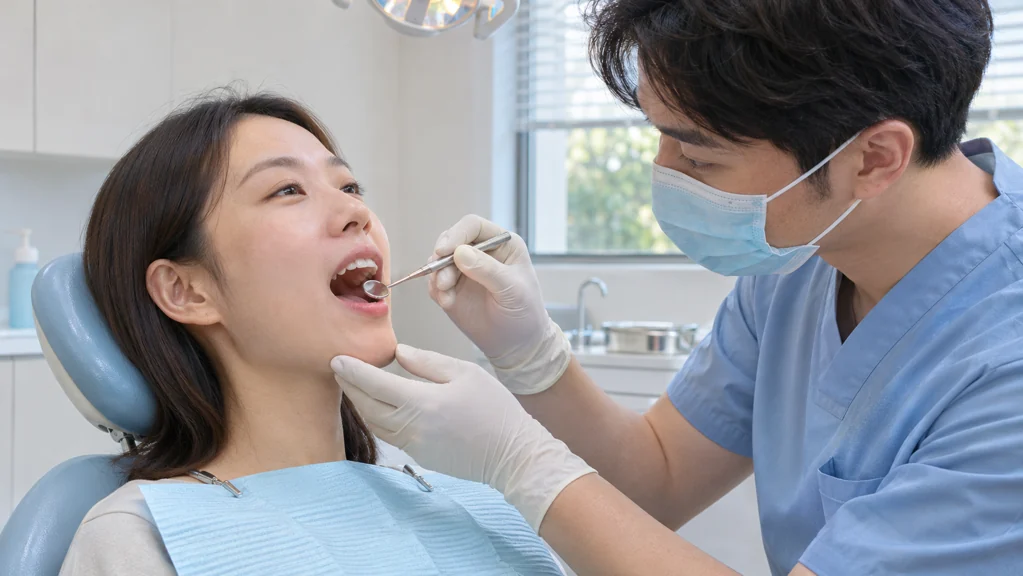
Before your appointment, note where food catches, when it began and whether discomfort continues after removal. Recent dental work and changes in the gum help the dentist decide what to examine.
| What you notice | What your dentist may check |
|---|---|
| Food catches in the same gap at most meals | The contact, tooth shape and bite |
| Trapping started after a filling or crown | The restoration’s edge, contour and contact with the next tooth |
| Floss repeatedly catches or shreds | Rough edges, tartar, restorations and decay |
| The gum feels sore, bleeds or looks different | The local gum and supporting tissues |
These clues help locate the problem. An examination is needed to establish the cause. Your dentist may also ask which foods get trapped, whether chewing hurts and whether your teeth meet differently.
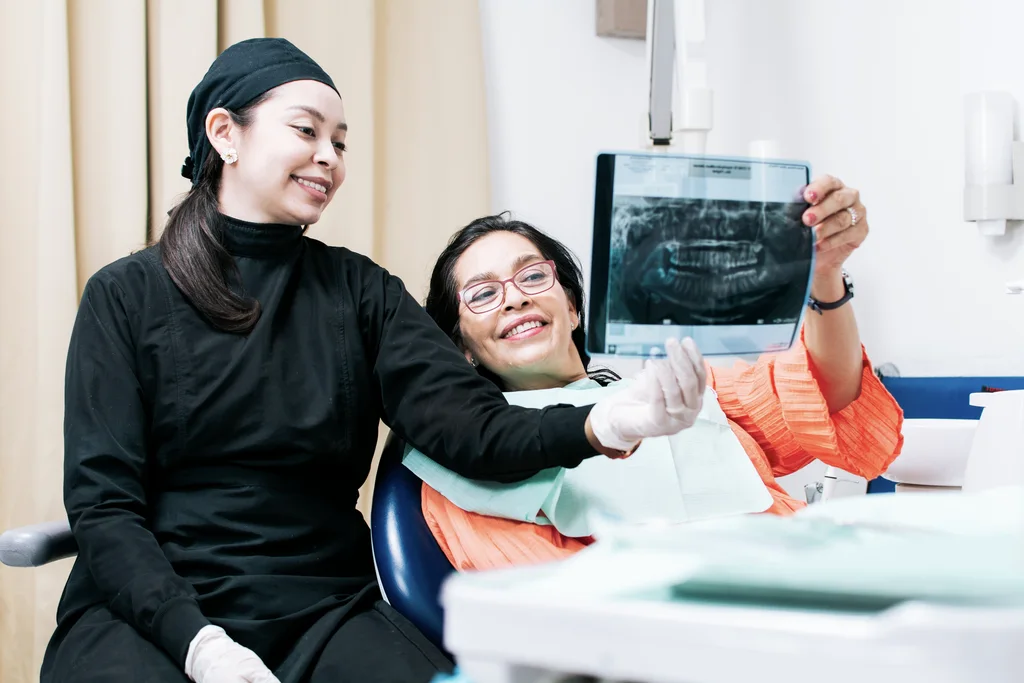
X-rays may be appropriate to look for decay between teeth or another source of pain. Your dentist considers the images alongside your symptoms and the findings in your mouth.
Treatment follows the cause. It may begin with removing the lodged food and showing you a cleaning technique suited to the space. Decay or a damaged restoration may need a filling or repair. Gum problems may call for cleaning and treatment of the affected tissues.
Let your dentist know if the same spot continues to trap food after care, and describe whether it happens with the same foods or at every meal.
Does the same gap keep trapping food?
A dentist can check the tooth contact, restorations, gum and bite. Choose a clinic to ask about an appointment:
Frequently asked questions about food stuck between teeth
Why do I keep getting food stuck in the same tooth?
A change in the contact between neighbouring teeth, an edge that catches food or a local gum problem can make trapping recur in one place. Your dentist can check the area. Mention when it began and any recent dental work, especially if floss catches or discomfort continues after cleaning.
Can food stuck between teeth cause pain?
Food pressing against the gum can cause discomfort. Pain that continues after removal, or repeated bleeding or swelling in the same place, needs a dental check. If the area is already sore, avoid repeatedly trying to floss there or using sharp tools to dislodge food.
Can trapped food cause bad breath?
Lodged food and bacteria may cause a local unpleasant smell. Persistent bad breath can also involve the tongue, gum problems or a dry mouth, so mention this to your dentist. Read about bad breath and its possible causes.
Sources
The advice on cleaning and seeking help draws on the following public information, consulted on 18 November 2026.
- Hong Kong Department of Health, Oral Health Promotion Division, guidance on cleaning between teeth with floss, floss holders and interdental brushes.
- American Dental Association, MouthHealthy, Dental Emergencies.
- NHS, Toothache, reviewed in July 2024.
- JCDA, published by the Canadian Dental Association, How to manage a patient experiencing pain due to food impaction (2014), for the causes, examination and management of recurring food impaction.
Diestel Dental Group has clinics in Central, Tung Chung and Discovery Bay. Choose a clinic and ask about an appointment, mentioning where food catches and any pain, bleeding or recent dental work.
This article provides general oral health information. A dentist can assess your individual symptoms and care needs.