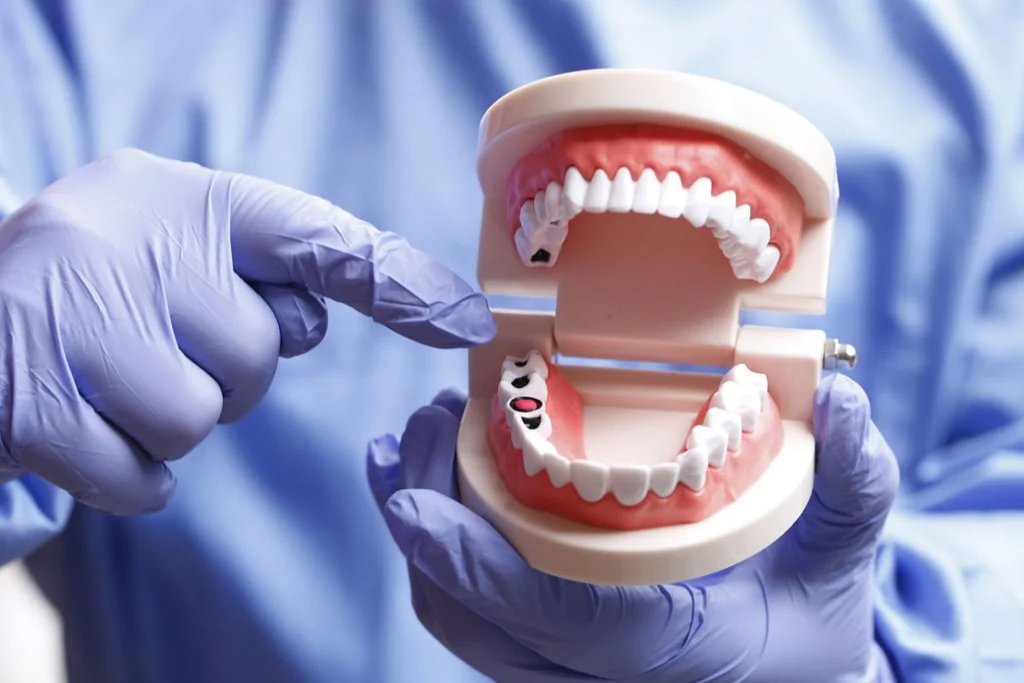
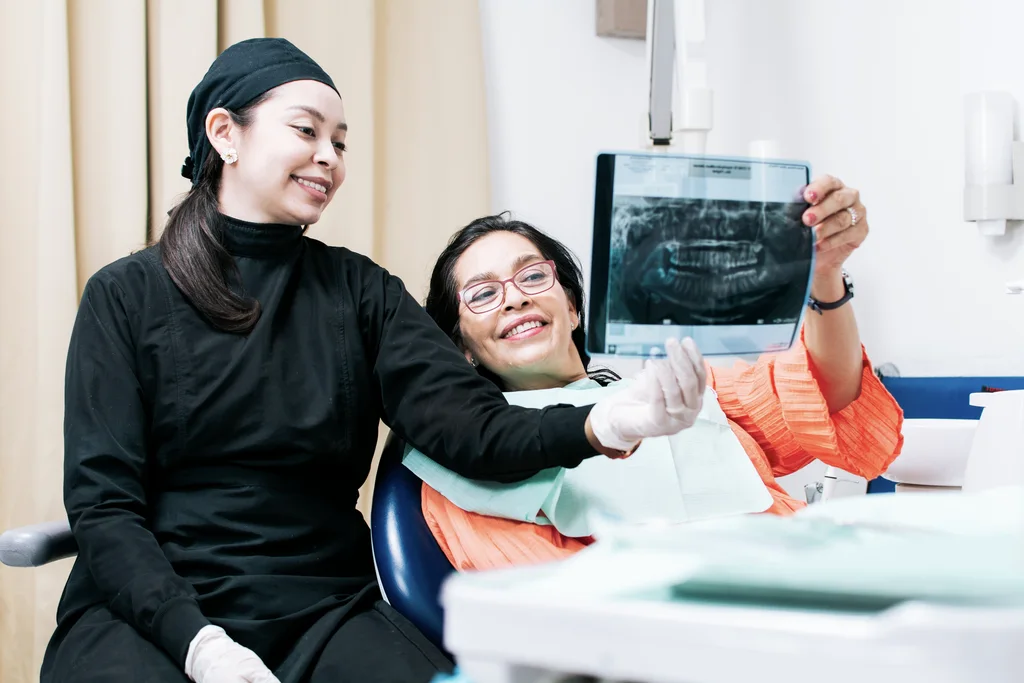
Wisdom tooth extraction cost in Hong Kong has no fixed price. It depends mainly on whether the tooth comes out in a simple extraction (about 10–20 minutes) or needs surgery (about 30–90 minutes). Angle, depth, nerve position, CBCT, anaesthesia, who treats you and how many teeth come out also affect the total. Reference fees are on our tooth extraction page.
Two “extractions” can be very different jobs. A fully erupted wisdom tooth with straight roots is a short procedure. A tooth lying sideways in the lower jaw with its roots against the nerve takes longer, needs more steps and carries more risk, which is why wisdom tooth removal cost can differ so much from one case to another. A dentist usually needs to examine you and take an X-ray before saying which group you fall into.
1. Simple or surgical extraction: the biggest price difference
- Simple extraction: the tooth has fully come through the gum and the roots are a typical shape. Under local anaesthetic, the dentist loosens the tooth and lifts it out, usually in about 10–20 minutes.
- Surgical extraction: the tooth is partly or fully under the gum or bone, so the gum has to be opened first. This usually takes about 30–90 minutes, depending on how complex it is.
Surgery is more likely when:
- the wisdom tooth is only half through, or still buried in gum or bone (impacted)
- it grows sideways or tilts forward into the molar in front
- the roots are curved, split or numerous
- the crown has decayed or broken away, leaving little for the dentist to grip
A surgical extraction usually involves four steps:

1. Opening the gum
Opening the gum under local anaesthetic to expose the tooth
↓
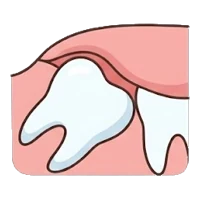
2. Removing some bone
Removing a small amount of surrounding bone if needed
↓

3. Sectioning the tooth
Dividing the tooth into sections and removing them one at a time, which limits the effect on nearby tissue
↓

4. Stitches
Cleaning the site and placing stitches; dissolvable stitches usually go within 7–10 days
Those extra steps add chair time, instruments and follow-up, which is why a surgical extraction usually costs more than a simple one. Whether you need surgery is decided after an examination and X-ray, not by how much the tooth hurts or how it looks.
2. Angle, depth and upper or lower jaw
Wisdom teeth are the third molars at the very back of the mouth, and they often come in crooked because there is not enough room.
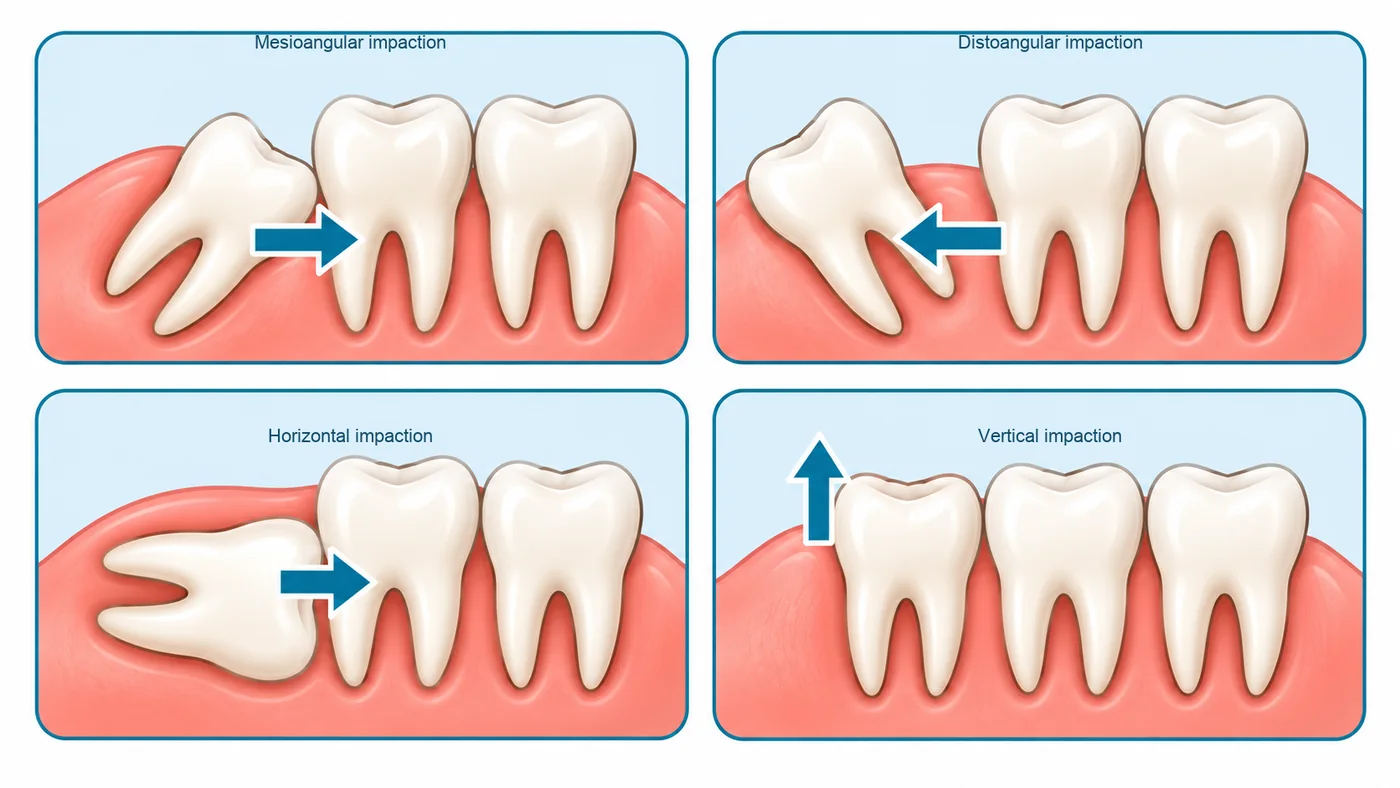
| How the tooth sits | Usual approach |
|---|---|
| Upright and fully erupted | Often a simple extraction |
| Tilted forward into the next molar | Often needs the gum opened or the tooth sectioned (these teeth tend to trap food and get inflamed) |
| Lying horizontally in the bone | Usually needs bone removal and sectioning |
| Completely buried in bone | If removal is needed, gum and bone have to be opened first; a more complex operation |
The deeper the tooth, the more bone has to come away and the longer it takes. Lower wisdom teeth are usually more involved than upper ones because the lower jaw bone is denser and the nerve runs close by. With upper wisdom teeth, the dentist checks how close the roots are to the sinus.
Age plays a part too. In younger people the roots are often not fully formed and the bone is more flexible, so surgery and healing tend to be easier. Older patients can still have wisdom teeth removed, but the roots and bone may be harder to work with.
3. Roots, the nerve and the sinus
The roots of lower wisdom teeth often sit close to the inferior alveolar nerve, which gives feeling to the lower lip and chin. The closer the roots are, the more carefully the dentist has to plan the direction and steps of surgery. Upper wisdom tooth roots can sit close to the maxillary sinus.
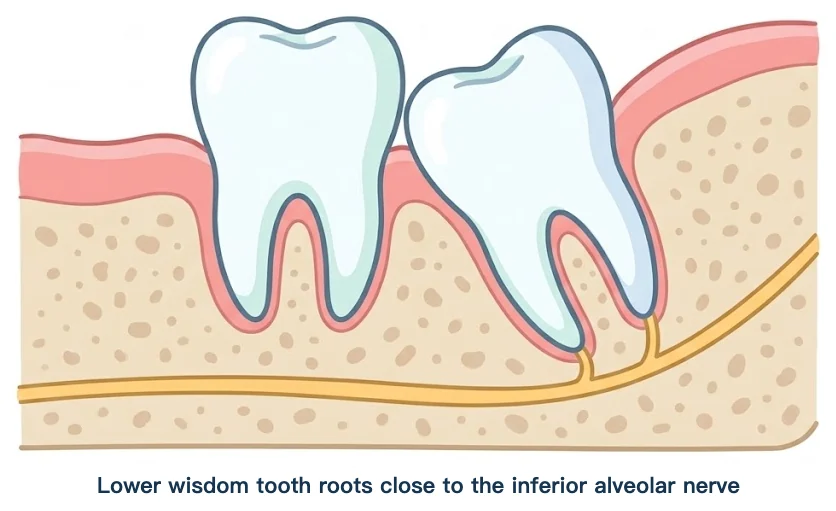
Curved, split or extra roots also take longer to remove. If the scans show the roots are very close to the nerve, the dentist may suggest a coronectomy: removing the crown and leaving the roots nearest the nerve in place to lower the chance of touching it, with follow-up visits afterwards. Whether this suits you depends on your scans, and the dentist will explain the risks beforehand.
4. X-rays and 3D CBCT before surgery
Before removing a wisdom tooth, the dentist usually takes an X-ray, such as a panoramic film, to see the tooth’s angle, the shape of its roots and roughly where the nerve runs.
If the X-ray shows the roots near the nerve or sinus, or the picture is unclear, the dentist may recommend a 3D cone beam CT (CBCT) scan. CBCT shows the distance between roots and nerve in three dimensions and is used to assess and plan the surgery. Not every case needs one, but when it does, the scan adds to the total cost.
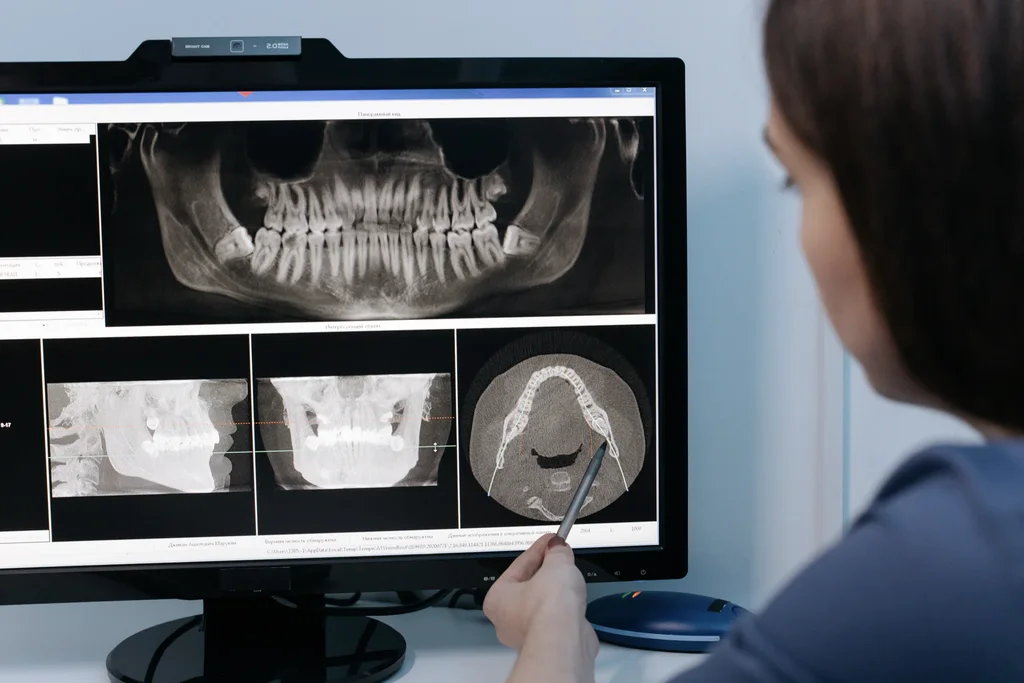
Within Diestel Dental Group, Smith & Jain Dentists, Bayside Dental Tung Chung, Bayside Dental Discovery Bay (North Plaza) and Bayside Dental Discovery Bay (Main Plaza) have 3D CBCT. Patients seen at Diestel & Partners (Dental Surgeons) can have a CBCT scan arranged at another group clinic if they need one.
5. Anaesthesia: local anaesthetic or sedation

Most extractions, including many surgical ones, are done under local anaesthetic. Once it takes effect you should not feel pain, only pressure and pushing.
If you are very anxious at the dentist, have a strong gag reflex, or need several wisdom teeth out in one longer session, you can ask about sedation or monitored anaesthesia care so you stay more relaxed. Sedation must be given and monitored by qualified personnel, your health and medical history are checked first, and it is charged separately. If you are interested, ask the clinic when you book; see dentistry under sedation.
6. Who does it: a dentist or a specialist in oral and maxillofacial surgery
Simple extractions and many wisdom tooth operations are done by a dentist in the clinic. More complex cases, for example a deeply buried tooth, roots pressed against the nerve or a cyst around the tooth, may be treated by a specialist in oral and maxillofacial surgery. Specialists have additional training and usually charge more, but not every case needs one. Your dentist will advise after the assessment.
Under Dental Council rules, only dentists on the specialist register can call themselves specialists in oral and maxillofacial surgery. You can check this yourself on the Dental Council of Hong Kong register. Our team includes specialists in oral and maxillofacial surgery; see each dentist’s qualifications on our dentists page.
7. Number of teeth, infection or cysts, and your health
- Several teeth at once: removing two or four wisdom teeth in one visit changes the operating time, anaesthesia and recovery, so the total differs from doing them separately.
- Active infection: if the gum is inflamed or infected, the dentist may need to treat that first or clean it up during surgery, which adds steps and follow-up.
- Cysts and lab tests: a cyst around the tooth may need to be removed at the same time and sent to a laboratory.
- Health and medication: if you have high blood pressure or diabetes, or take medicine that affects bleeding, the dentist will review your history first and may need an extra assessment or visit, which can change the fee.
What a wisdom tooth extraction quote includes: questions to ask

Quotes from different clinics do not always cover the same things. Before comparing how much a tooth extraction costs, ask whether these are included:

Examination and consultation: is the first visit charged separately?
X-ray or CBCT: are scans included?
The procedure: is it a simple or a surgical extraction?

Anaesthesia: is local anaesthetic included, and is sedation extra?

Medication: painkillers, anti-inflammatories or antibiotics
Follow-up: how many review visits, and is stitch removal included?

Laboratory tests: is there a separate fee if tissue is sent for testing?
Because the fee depends on what the X-ray shows, a clinic can usually give only a rough range over the phone. The dentist will usually explain the treatment plan and estimated fee after the examination so you can decide before going ahead. If things change during treatment, for example a root fractures and the tooth has to come out surgically, the dentist will normally talk this through with you first. For general fee levels in Hong Kong, see our dental fee reference.
Not sure whether your wisdom tooth needs surgery?
A dentist will examine you and take an X-ray, then explain how the tooth can come out and what it will cost. Choose the clinic nearest you:
How long recovery takes
Most people are back to light work within about a week, though it depends on how difficult the extraction was. As a general guide:
- First 24 hours: bite firmly on gauze for 30–45 minutes to stop the bleeding; a little blood in your saliva that day is common
- Days 2–3: swelling and jaw stiffness peak; stick to soft food and avoid straws
- About one week: dissolvable stitches start to go and most people are back to light work
- After two weeks: chewing gradually returns to normal
Surgical extractions usually need more time off than simple ones. Your dentist will advise whether you need sick leave and for how long. Contact a dentist promptly if bleeding continues, pain gets worse, swelling spreads or you develop a fever. Outside office hours, see emergency dental care.
Frequently asked questions about wisdom tooth extraction cost
How much does wisdom tooth extraction cost in Hong Kong?
Prince Philip Dental Hospital’s private patient fee schedule lists wisdom tooth removal, including impacted teeth, at about HK$5,000–10,000 and a simple extraction at about HK$700–2,000, with sedation charged separately; these are reference figures only, not our clinics’ actual fees. There is no fixed price: it depends mainly on whether the extraction is simple or surgical, and is confirmed after an examination and X-ray. More on our tooth extraction page.
Do I need to remove a wisdom tooth if it doesn’t hurt?
A wisdom tooth that doesn’t hurt does not always need to come out, as long as it has come through normally, can be cleaned well and is not causing problems. But no pain does not always mean no problem: an impacted tooth can cause decay in the molar in front, or a cyst may show up on an X-ray. A dentist decides after an examination and X-ray.
At what age should wisdom teeth be removed?
There is no set age for wisdom tooth removal, but in younger people the roots are often not fully formed and the bone is more flexible, so surgery and healing tend to go more smoothly. For that reason, dentists often suggest dealing with a problem wisdom tooth early. Older adults can still have them removed after an assessment of the X-ray, bone and general health.
Does wisdom tooth extraction hurt?
Wisdom tooth extraction is done under local anaesthetic, so once it takes effect you should feel pressure rather than pain. When the anaesthetic wears off there will be some pain and swelling, usually managed with the medication your dentist prescribes. After a simple extraction many people have only a mild ache within a few days; surgical extractions usually take longer to settle.
How long does pain last after wisdom tooth removal?
Pain and swelling after wisdom tooth removal usually peak on days 2–3, then ease, and most people feel much better within a week. Surgical extractions usually take longer to settle than simple ones. If the pain gets worse after day three or four, or you notice a bad taste or a fever, it may be an infection or dry socket (the blood clot comes away and leaves bone exposed), so see your dentist promptly.
How many days off work do you need after wisdom tooth removal?
Time off after wisdom tooth removal depends on how difficult the surgery was and the kind of work you do. After a surgical extraction, swelling peaks on days 2–3 and many people rest during that time, returning to light work within about a week; simple extractions usually heal faster. Your dentist will advise, and you can ask about a sick leave certificate if you need one.
Do I need an X-ray or CBCT scan before a tooth extraction?
You usually need an X-ray, such as a panoramic film, before a wisdom tooth extraction, and for most cases this is enough. A dentist may recommend a 3D CBCT scan when the roots look close to the nerve or sinus, or the X-ray is unclear. Smith & Jain Dentists, Bayside Dental Tung Chung, Bayside Dental Discovery Bay (North Plaza) and Bayside Dental Discovery Bay (Main Plaza) have 3D CBCT; patients at Diestel & Partners can have a scan arranged at another group clinic.
Is wisdom tooth extraction covered by insurance?
Whether wisdom tooth extraction is covered depends on your policy. Some medical or dental plans cover extractions that are medically necessary, but cover varies, so check with your insurer before treatment and ask what documents a claim needs.