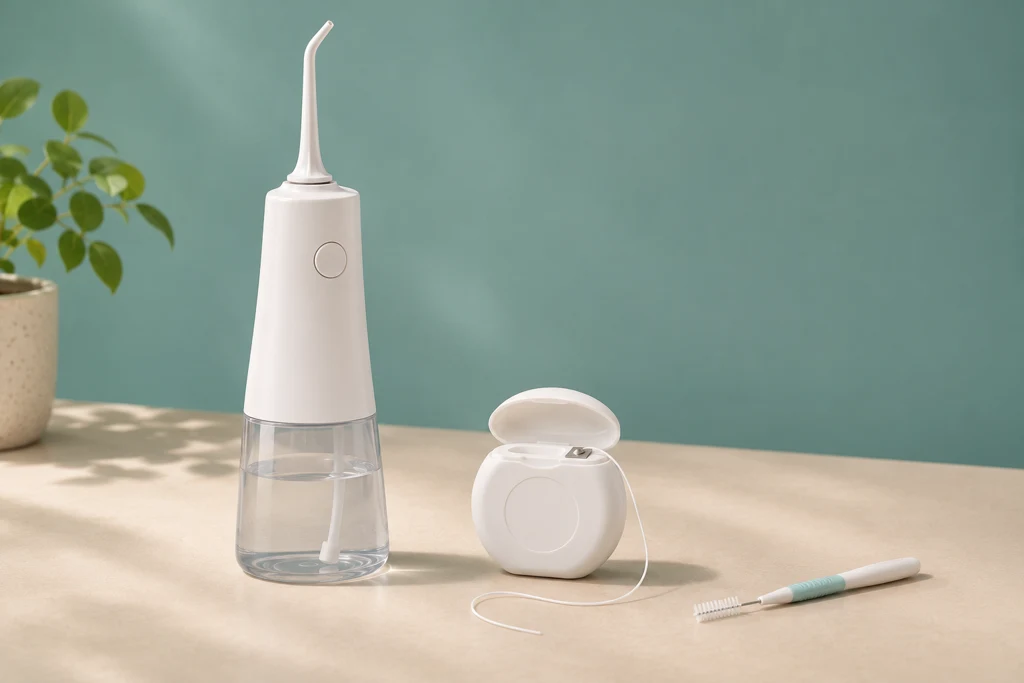
Illustrative image, not a product endorsement.
A water flosser directs water around and between teeth to help remove food and plaque. String floss cleans by contacting the tooth surface. The appropriate tool depends on your teeth, gums, dental work and ability to use it. If string floss works well for you, there is no automatic need to switch.
How do water flossers and string floss differ?
A water flosser, also called an oral irrigator, uses a stream of water to clean areas that can be difficult to reach. String floss passes through the contact between teeth and curves against each tooth surface.
It is inaccurate to say that a water flosser only removes food: it can also help remove plaque. That does not establish that every device suits every mouth or replaces all other cleaning tools. Consistent, appropriate use and the condition of your gums matter more than visible debris in the sink.
| Tool | Situations to discuss | Practical limitations |
|---|---|---|
| String floss or a floss holder | Tight contacts and accessible tooth surfaces | Technique matters; avoid snapping floss into the gum |
| Interdental brushes | Spaces that fit a suitable brush | Size and direction need to match the space; do not force a brush through |
| Water flosser | Difficulty handling string floss, braces or complex dental work | Settings, tip selection and positioning require appropriate guidance |
This is not a ranking of products. Different spaces in the same mouth may need different tools, and a new device is not a reason to abandon a method that is already working.
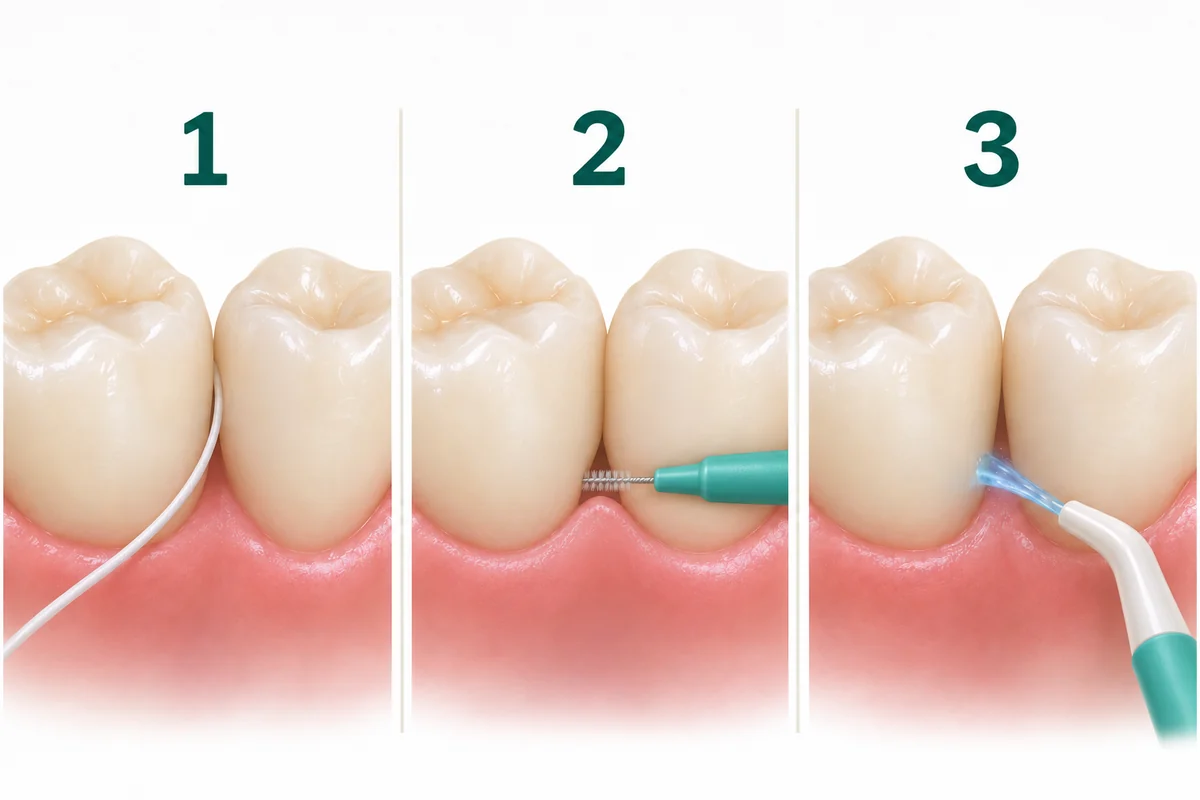
- String floss
- Interdental brush
- Water flosser
1 String floss alongside the tooth surface; 2 an appropriately sized interdental brush in a gap that accommodates it; 3 a water flosser directed toward the gap and gum margin. Not an effectiveness ranking or individual technique prescription. Fit and use depend on your teeth and dental advice.
What if you have braces, bridges or limited hand movement?
Braces, bridges and other dental work can make string floss harder to use. A water flosser may help, while a floss threader, specialist floss, an interdental brush or a floss holder may also be suitable. Whether tools should be combined depends on the areas being cleaned.
If handling floss is difficult, bring your current tools to an appointment. A dentist or registered dental hygienist can demonstrate a technique that fits your dexterity and dental work. The aim is a routine you can maintain, rather than a larger collection of devices.
Can a water flosser replace professional cleaning?
No. Home cleaning does not replace dental checks or professional removal of hardened tartar. Persistent bleeding, swelling or visible deposits need assessment rather than repeated use of higher pressure.
Read about professional dental cleaning for the distinction between daily care and treatment. If you also have ongoing mouth odour, our bad breath guide explains why removing trapped food may not address the whole problem.
Using a water flosser without causing irritation
Follow the device instructions for setup, positioning, cleaning and replacement of components. Start with a low, tolerable setting; higher pressure is not automatically more effective. Do not share the device with another person.
If you have a recent dental operation, a wound, an implant or a particular restoration, ask about timing, settings and tip choice before using the device around that area. Do not aim into a wound or probe beneath the gum with the tip.
Keep brushing twice a day and cleaning between teeth daily. Food repeatedly catching in one place, ongoing odour, bleeding or pain warrants a dental assessment even if the mouth feels cleaner after irrigation. Our dry mouth guide covers a separate issue that may affect oral care needs.
When should you ask for advice?
Stop repeatedly applying pressure to an area that becomes painful or injured, and ask a dental professional about the cause and technique. Persistent bleeding should not simply be dismissed as getting used to a new tool.
Swelling, pus, a loose tooth or continuing pain needs dental assessment. A water flosser cannot diagnose or treat every cause of gum symptoms. Difficulty breathing or swallowing requires immediate emergency medical help.
Should I floss before or after brushing?
For string floss, a practical routine is to clean between the teeth before brushing with fluoride toothpaste. NHS advice favours flossing before brushing. Afterwards, spit out excess toothpaste without immediately rinsing with water, which would wash away fluoride left on the teeth.
That advice does not establish one mandatory sequence for every water flosser. Follow the device instructions and individual dental advice, while avoiding immediately washing away toothpaste after brushing. The aim is to complete daily interdental cleaning consistently, rather than let uncertainty about sequence lead to skipping it.
Do I need to buy a water flosser if I already use floss or interdental brushes?
Consider whether your present method is manageable, reaches the relevant tooth surfaces and dental work, and leaves any repeated bleeding or food trapping. If string floss works well and there are no associated gum problems, advertising alone is not a reason to replace it.
If handling floss is difficult, ask about a floss holder or other interdental options before comparing water flossers. Braces, bridges and reduced dexterity affect the decision, but do not establish that a particular device is best. Bring your tool or product details to an appointment so you can show where the difficulty occurs.
Practical purchasing questions include reservoir capacity, space near the basin, ease of cleaning and availability of replacement tips. These may affect whether you use it consistently; they do not rank clinical effectiveness or replace individual assessment.
Can I add mouthwash, and which pressure should I choose?
Do not assume that mouthwash in the reservoir works better than water. The Hong Kong Consumer Council's guidance describes mixed comparative findings and notes that brief jets may not provide the contact time a mouthwash requires. Check whether your device permits a liquid before adding it. Use prescribed mouthwash as directed by your dentist rather than mixing your own solution.
Start with a lower setting recommended by the manufacturer and adjust according to dental advice and your oral condition, rather than aiming for maximum pressure. Do not repeatedly increase pressure on a painful or bleeding spot. No single nozzle angle, pressure or duration applies to every device; follow its instructions for use, cleaning and tip replacement.
Frequently asked questions about water flossers
Is a water flosser as effective as flossing?
Both can support cleaning between teeth, but suitability depends on the person and technique. A water flosser may help when string floss is difficult to handle. Ask whether it should be used alone or with other tools for your particular spaces and dental work.
Can a water flosser remove tartar?
It does not replace professional removal of hardened tartar. Home cleaning helps manage plaque, while established deposits require dental care. Do not use high pressure or sharp tools to try to remove them yourself.
Should I increase the pressure if my gums bleed?
No. Bleeding can be related to inflammation or irritation and is not a signal to increase pressure. Repeated or persistent bleeding needs assessment and a check of your cleaning technique.
Do I still need to brush if I use a water flosser?
Yes. Continue brushing twice daily and cleaning between your teeth every day. These address different surfaces; a water flosser does not replace toothbrushing or routine dental checks.
Is it better to use string floss before brushing?
NHS general advice is to floss first, then brush. Spit out excess toothpaste afterwards without immediately rinsing with water. The timing of a water flosser should follow device instructions and individual advice.
Can I put mouthwash in a water flosser?
First check whether the device permits it, and do not assume that adding it improves effectiveness. Follow your dentist's instructions for prescribed mouthwash rather than mixing or changing its use yourself.
Should I increase pressure if food keeps collecting in one gap?
Repeated pressure is not the answer to persistent trapping. Ask your dentist to assess the cause and show a suitable cleaning method.
To discuss your cleaning routine, choose a practice from the Diestel Dental Group clinic directory. This article does not endorse individual products or replace a personal dental assessment.