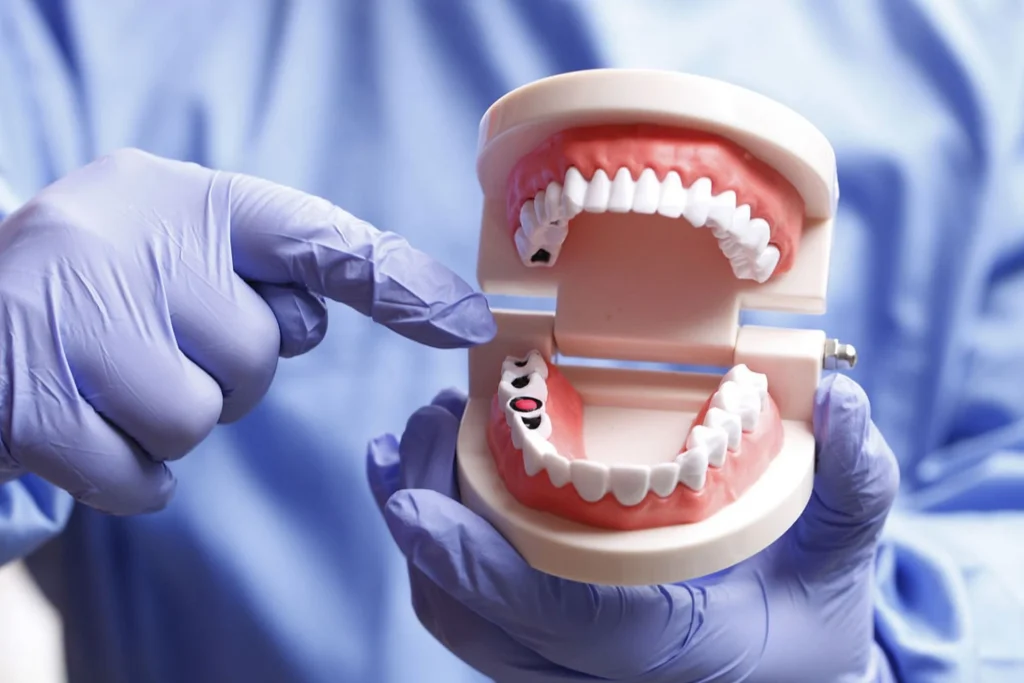

Most jaw pain near the ear comes from the temporomandibular joint (TMJ) or the chewing muscles around it, a group of problems called TMD. In Hong Kong, TMJ treatment usually starts with a dentist’s check and a custom splint, with self-care and physiotherapy alongside. More than 80% improve with conservative care; fewer than 5% need surgery.
What is the TMJ, and what is TMD?
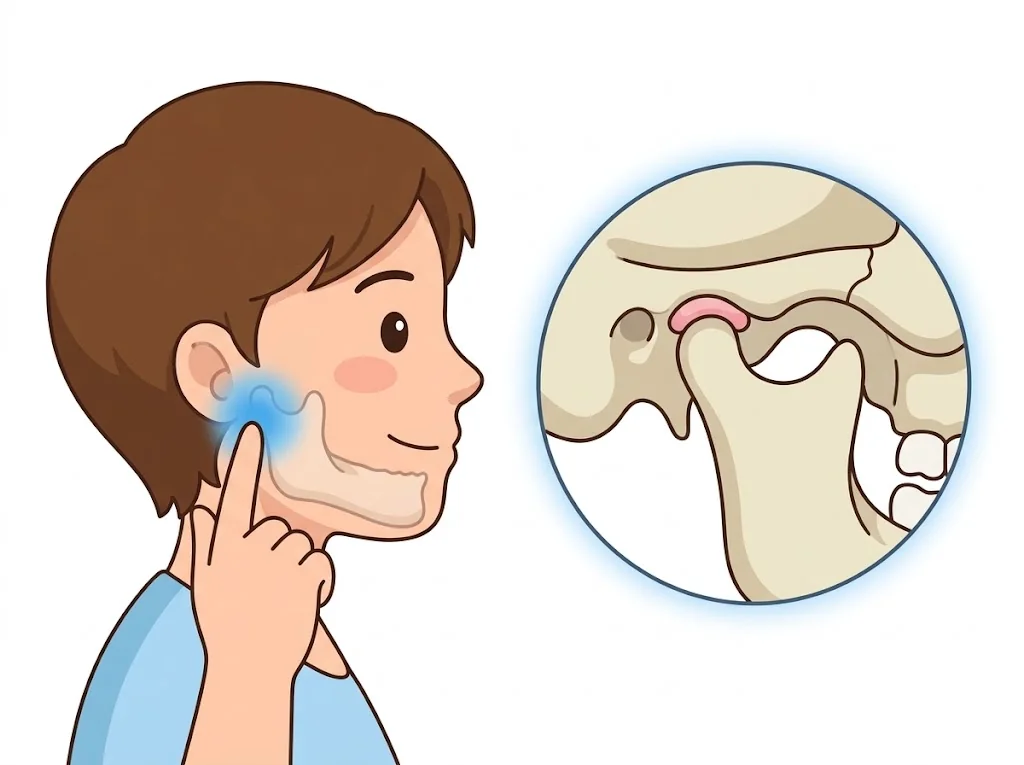
Put your fingertips just in front of your ears and slowly open and close your mouth. The movement you feel is your temporomandibular joint. There is one on each side, connecting your lower jaw to your skull, and you use them every time you talk, chew or yawn. A small disc of cartilage inside each joint acts as a cushion, and the chewing muscles around it move the jaw.
TMD (temporomandibular disorder) is not a single disease: it covers problems with the joint, the disc and the muscles. In everyday speech, many people simply call it “TMJ”.
TMJ pain or toothache? How to tell the difference
Pain from a tooth can spread to the jaw, so “jaw pain” is sometimes really a tooth problem. The two need different treatment.
| TMJ disorder | Wisdom tooth infection | Tooth decay or nerve inflammation | Gum abscess | |
|---|---|---|---|---|
| Where it hurts | In front of the ear, one or both sides | Back of the mouth, angle of the jaw | One tooth, sometimes hard to pinpoint | Gum around one tooth |
| When it’s worse | Chewing, opening wide, on waking | Chewing and opening, when the gum swells | Hot, cold or sweet food; at night | Biting, pressing on the gum |
| Other signs | Clicking, limited opening, headache, earache | Swollen gum, bad taste, trouble opening, sometimes fever | Sensitivity, throbbing pain | Swelling with pus, bad taste, possible fever |
If the pain sits in one tooth, gets worse with hot or cold, or comes with a swollen gum, a tooth is the more likely cause. Our sister clinic’s toothache relief guide explains what to do, and you can read about wisdom tooth removal here. The two problems can also happen together, so a dental check is the safest way to know.
Common TMJ symptoms
- Jaw clicking or popping when you open or close your mouth, or a grating sound. Clicking with no pain and normal opening usually needs no treatment, but keep an eye on it.
- Pain when chewing or opening wide, with tenderness in front of the ear.
- Limited opening: you can’t open fully, or your jaw shifts to one side. In more severe cases it gets stuck open or closed.
- Headaches, often at the temples, the back of the head or behind the eyes. They can feel like tension headaches and are often worse in the morning.
- Earache or a blocked feeling, without an ear infection. The joint sits right next to the ear canal.
- Ringing in the ears (tinnitus). Tinnitus is linked with TMD, and some people notice it eases after TMJ treatment.
- Neck and shoulder tension.
Jaw clicking
Limited opening
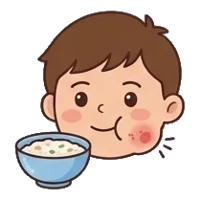
Pain when chewing
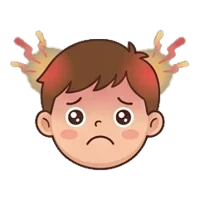
Headache
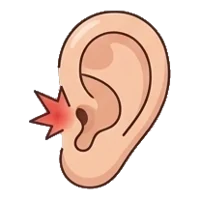
Earache
What causes TMJ pain?
TMJ pain usually has more than one cause, and several factors often add up.
Clenching and grinding (bruxism)
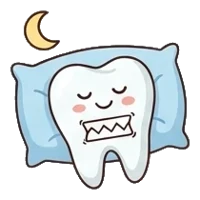
Clenching during the day or grinding at night keeps the jaw muscles working for hours, which is why many people wake with a sore jaw or a headache at the temples. Most only find out because a partner hears the grinding or a dentist spots worn, flattened teeth. Our sister clinic has a full guide to bruxism and teeth grinding.
Bite problems: a high filling, loose dentures or missing teeth
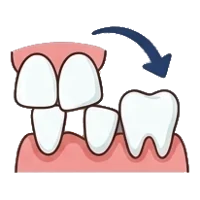
A new filling or crown that sits slightly high, dentures that no longer fit, or gaps from missing teeth can make you chew unevenly, and the joint and muscles have to compensate. Crowded teeth, a deep bite or an underbite can do the same. When a dentist corrects a high filling or refits a denture, some people feel better.
Stress and posture

Stress tightens muscles, and many people clench without noticing. Looking down at a phone or leaning your head forward at a desk loads the neck and jaw muscles too. Clenching while lifting something heavy is another common habit.
Disc displacement and arthritis
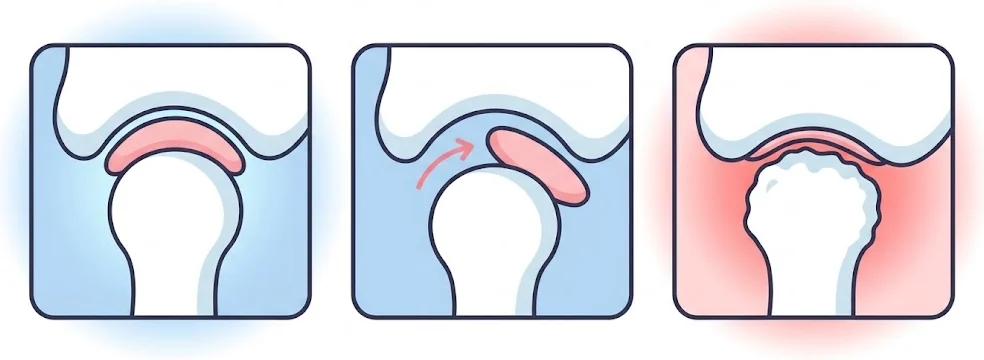
If the cartilage disc slips out of place, the jaw may click when it opens. If the disc gets stuck, opening becomes limited. Wear or inflammation in the joint (arthritis) can cause ongoing pain.
Injury and other habits
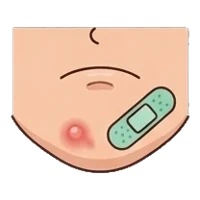
A blow to the chin, whiplash, or opening too wide (a big yawn, for example) can strain the joint. The jaw can also ache for a while after a long dental procedure with the mouth wide open, such as wisdom tooth removal. Nail-biting, chewing pens, resting your chin on your hand, chewing on one side and chewing gum a lot all add to the load.
How to ease TMJ pain at home
For mild TMJ pain, start by taking the load off the joint. These steps help when symptoms first appear or flare up, and they work alongside any treatment from your dentist.


Eat soft food: soup, congee, eggs, fish, tofu, well-cooked vegetables. Cut food into small pieces.
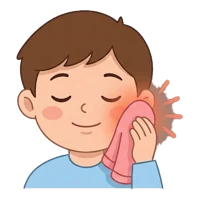
Use heat: a warm towel in front of the ear for 15–20 minutes relaxes tight muscles.

Use cold for sharp pain or swelling: an ice pack wrapped in a cloth for 10–15 minutes.

Rest your jaw: when you’re not eating or talking, keep your lips together and your teeth slightly apart.
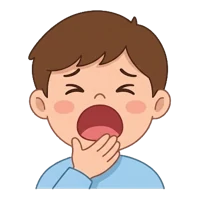
Limit wide opening: support your chin with your hand when you yawn or sneeze.

Check your posture: screen at eye level, shoulders relaxed, head not pushed forward.
- Avoid chewing gum, hard or tough food (nuts, jerky, hard sweets, whole apples), nail-biting and pen-chewing.
Anti-inflammatory painkillers such as ibuprofen can help for a short time. Check with a doctor or pharmacist that they suit you, and follow the dosage.
When to see a dentist: warning signs

Get help straight away if:
- Your jaw dislocates: you can’t close your mouth and your jaw juts forward or sits to one side. Don’t try to force it back yourself.
- Your jaw locks and you can’t open your mouth to eat.
- Your bite changes after an injury, or there is severe pain or swelling.
- You have facial swelling, fever or pus from the gum, which can mean an infection such as an infected wisdom tooth.
- Jaw pain (especially on the left) comes with chest pain or tightness, breathlessness or a cold sweat. This can be a heart problem: call 999 or go to A&E immediately.
Book a dental check soon if:
- Self-care hasn’t helped after two to three weeks, or the pain keeps coming back.
- You can open less and less, or a painless click has become painful.
- You often wake with a sore jaw or headache and suspect you grind your teeth.
Mild TMJ pain usually settles within a few weeks. Pain left for more than three months is more likely to become long-term, so if it hasn’t improved after two to three weeks, get it checked early. For toothache, injuries and other urgent problems, see our emergency dentist page to find the nearest clinic.
How dentists treat TMJ in Hong Kong
Treatment starts with conservative, reversible options, and most people never need surgery. A typical path looks like this:
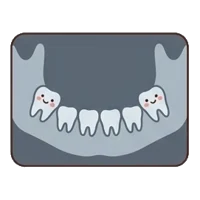
1. Examination and diagnosis
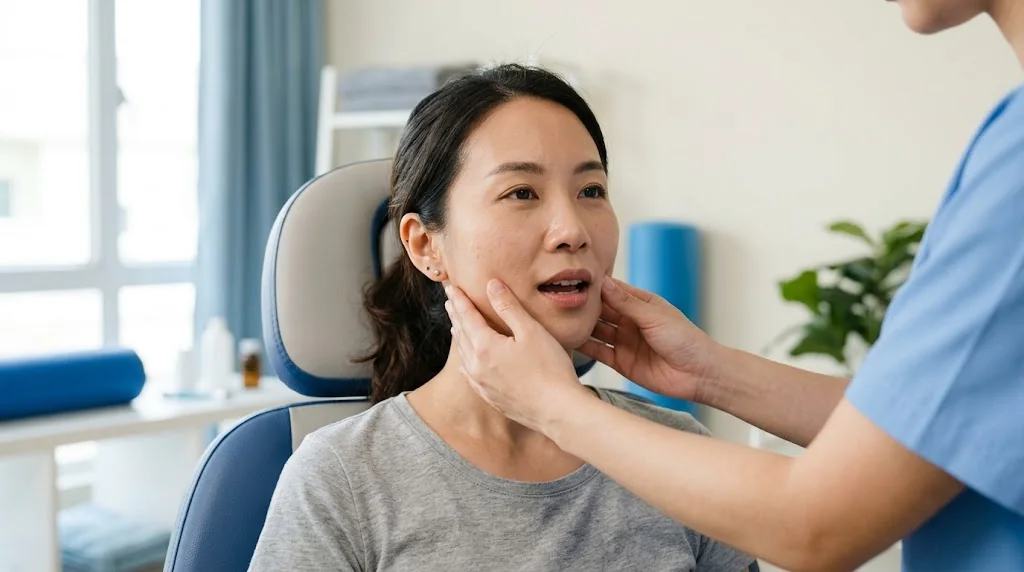
Your dentist asks where and when it hurts, then checks your bite, tooth wear, muscle tenderness, how wide you can open and any joint sounds. X-rays are taken if needed. For 3D imaging of the joint’s bony structure, our Smith & Jain Dentists clinic in Central and Bayside Dental Discovery Bay (Main Plaza) have 3D CBCT. A suspected disc problem may need a referral for an MRI.
↓
2. Explanation and self-care
Understanding what’s causing the pain, plus the home measures above.
↓
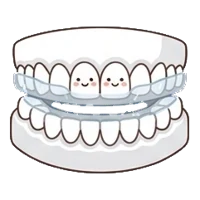
3. A custom splint
, usually worn at night (see below).
↓

4. Physiotherapy
A physiotherapist with TMD training designs jaw exercises to ease tight muscles and improve opening.
↓
5. Medication
Short-term anti-inflammatories or muscle relaxants, prescribed by a doctor or dentist where appropriate.
↓
6. Other options
For severely overactive jaw muscles that haven’t responded to other treatment, some clinicians consider Botox; see the FAQ below.
↓
7. Referral to an oral and maxillofacial surgeon
Only for a small number of cases, usually when 6–12 months of conservative care hasn’t worked and imaging confirms joint damage. A minimally invasive joint wash-out (arthrocentesis) is tried before open-joint surgery. Overall, fewer than 5% of people need surgery.
How does a TMJ splint work?
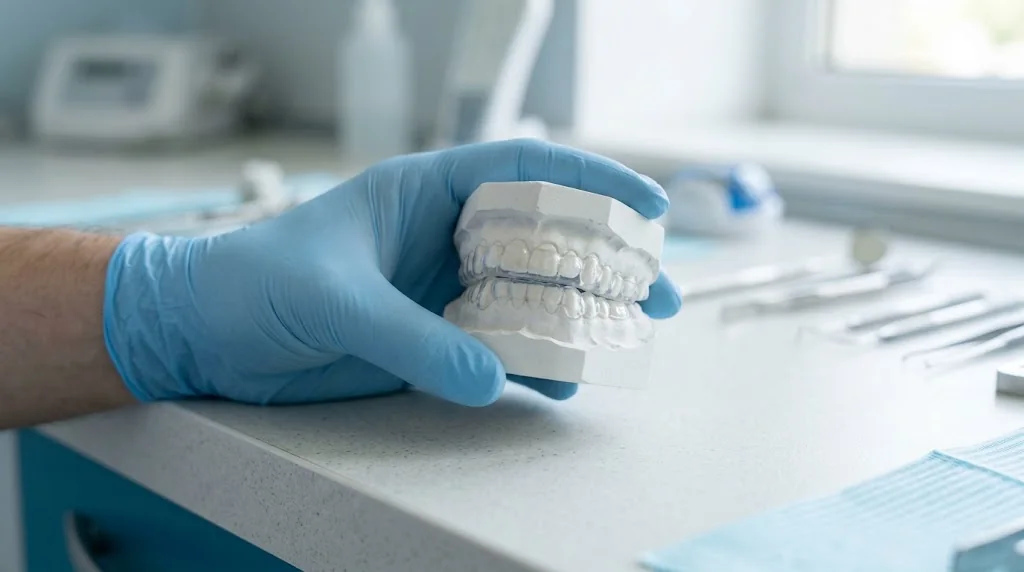
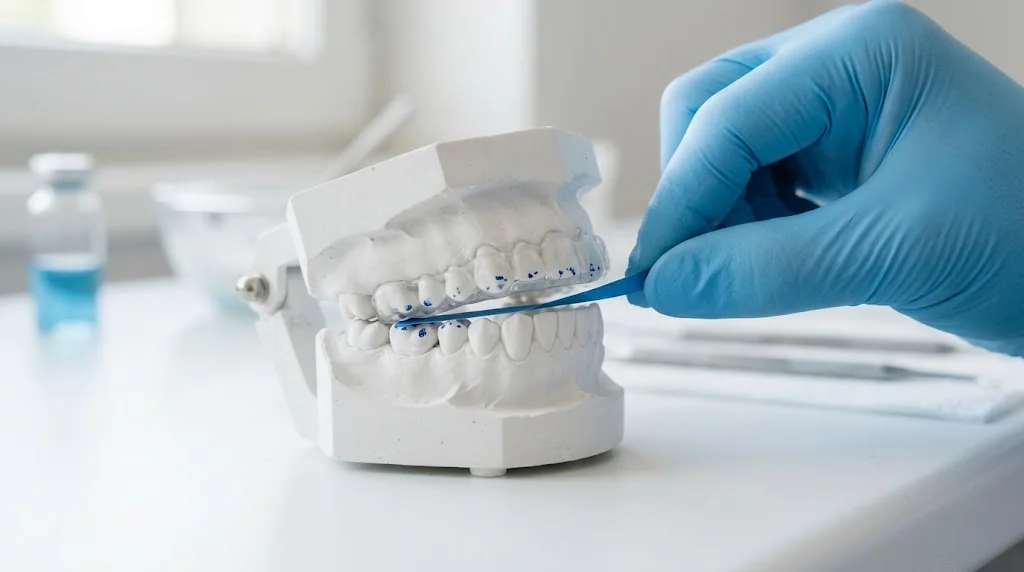
A splint (also called an occlusal splint or night guard) is a custom-made plastic appliance moulded to your teeth and usually worn at night. It:
- cushions the teeth and joints when you clench or grind, protecting the teeth from wear;
- reduces strain on the jaw muscles;
- holds the jaw in a more relaxed position to ease pressure on the joint.
A splint doesn’t stop grinding. It limits the damage, so it works as a long-term management tool and needs to be worn consistently. Hard splints are more durable and can be adjusted to your bite, so they are commonly used for TMJ problems; soft guards are sometimes used for mild grinding. Your dentist will advise which suits you. Over-the-counter guards may not fit your bite and can sometimes affect it, so check with a dentist first.
TMJ treatment costs in Hong Kong
The fees below are Prince Philip Dental Hospital (PPDH) private patient charges, a common reference point for dental fees in Hong Kong:
| Item | Reference fee (HK$) |
|---|---|
| TMJ problem (consultation) | 800–1,500 |
| TMJ problem (treatment) | 1,700–5,000 |
| TMJ splint | 3,600–5,600 |
| Occlusal splint | 3,700–6,000 |
| Reduction of a dislocated TMJ | 5,000–15,000 |
Your actual cost depends on the assessment, the treatment you need and the type of splint. These figures are for reference only; actual fees are confirmed after your consultation. See our full dental treatment fee reference for more.
Frequently asked questions about TMJ
Can TMJ go away on its own?
Often, yes. Mild TMJ pain caused by short-term stress or a minor strain usually settles within a few weeks with soft food, warm compresses and resting the jaw. If it hasn’t improved after two to three weeks or keeps returning, see a dentist; pain left for more than three months is more likely to become long-term.
Who treats TMJ in Hong Kong?
Start with a dentist. A dentist can check your bite, tooth wear, jaw muscles and joints, tell TMJ pain apart from toothache, and make a custom splint. If needed, they refer you to a physiotherapist, or to an oral and maxillofacial surgeon for the fewer than 5% of cases that may need surgery.
Does a night guard help TMJ?
A custom night guard (occlusal splint) helps many people with TMJ pain, especially when clenching or grinding is involved. It cushions the teeth, reduces muscle strain and eases pressure on the joint, but it doesn’t stop grinding. Prince Philip Dental Hospital (PPDH) lists a TMJ splint at HK$3,600–5,600 for private patients (for reference only, not our clinics’ actual fees; actual fees are confirmed after assessment).
How do I stop TMJ pain at night?
Night-time TMJ pain is often linked to clenching or grinding in your sleep. A warm compress for 15–20 minutes before bed, avoiding caffeine and alcohol in the evening, and keeping your teeth apart during the day can help. If you regularly wake with a sore jaw, ask a dentist about a custom splint.
Is Botox used for TMJ?
Sometimes. Botox can relax severely overactive jaw muscles when a splint and other conservative treatment haven’t helped enough. The effect lasts about 3–4 months and may slim the jawline. It is assessed case by case and is not a first-line treatment for TMJ.
How Diestel Dental Group can help
Most TMJ pain can be managed without surgery, and the first step is working out whether it comes from the joint, the muscles or a tooth. Diestel Dental Group has five clinics in Hong Kong (two in Central, one in Tung Chung and two in Discovery Bay), with a team that speaks English, Cantonese, Mandarin and other languages. Our dentists check your bite, tooth wear and jaw joints, make custom splints when needed, and refer you for physiotherapy or to an oral and maxillofacial surgeon if required. If jaw pain keeps coming back, choose a clinic near you to book a check. This guide is general information and not a diagnosis.
Want to find out why your jaw hurts?
Choose the clinic nearest you below, then book by WhatsApp or phone. Your dentist will first work out whether the pain comes from the joint, the muscles or a tooth, then recommend the right care. If your jaw locks or dislocates, use our same-day emergency dental care.