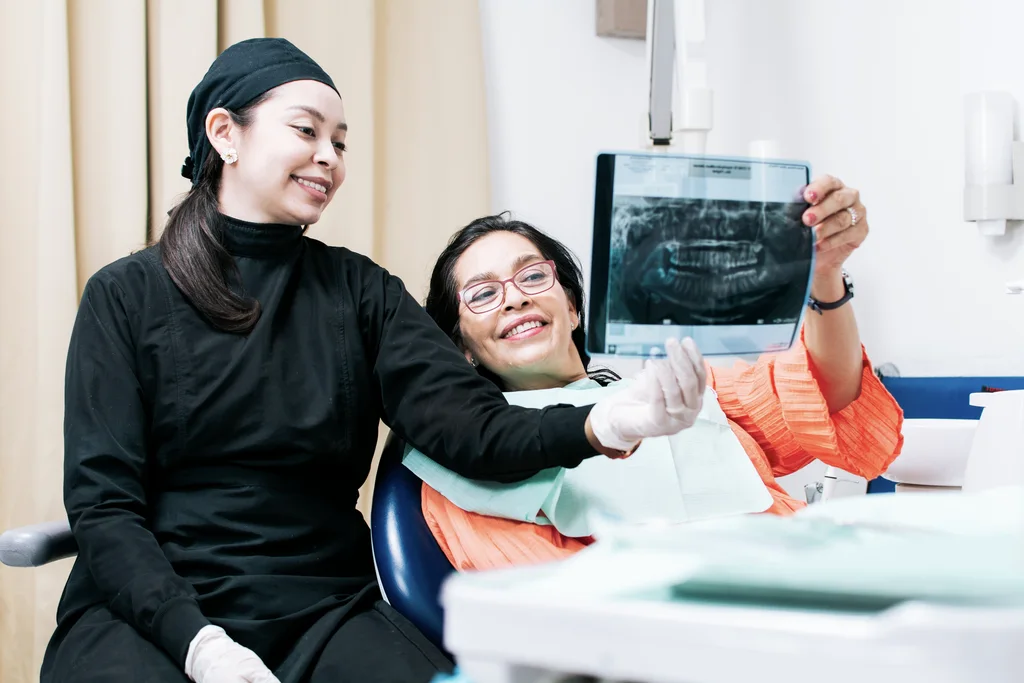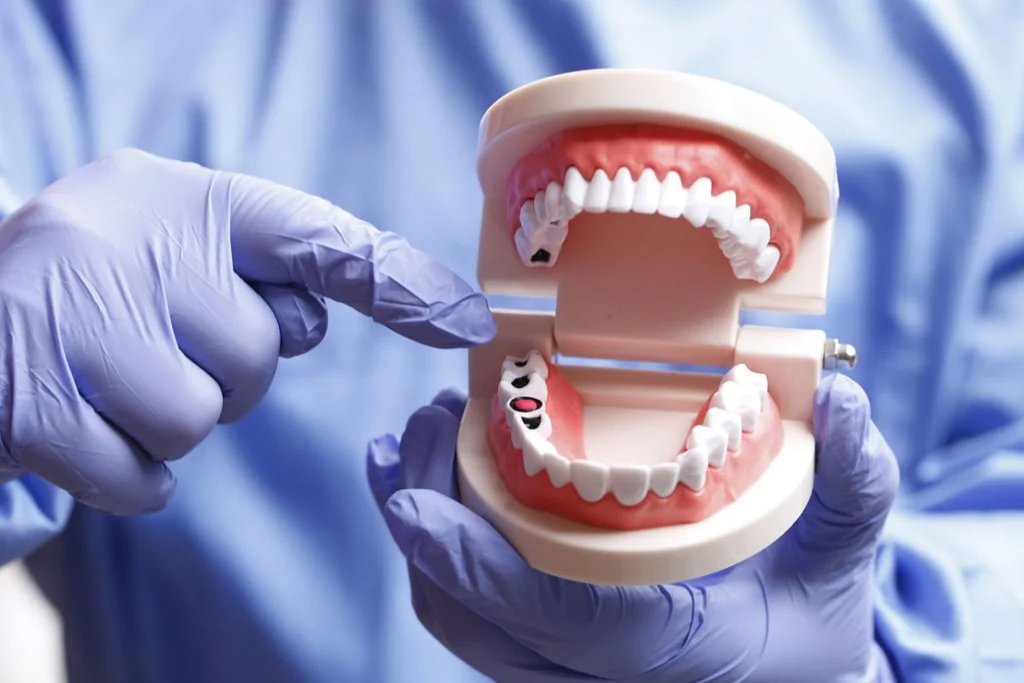
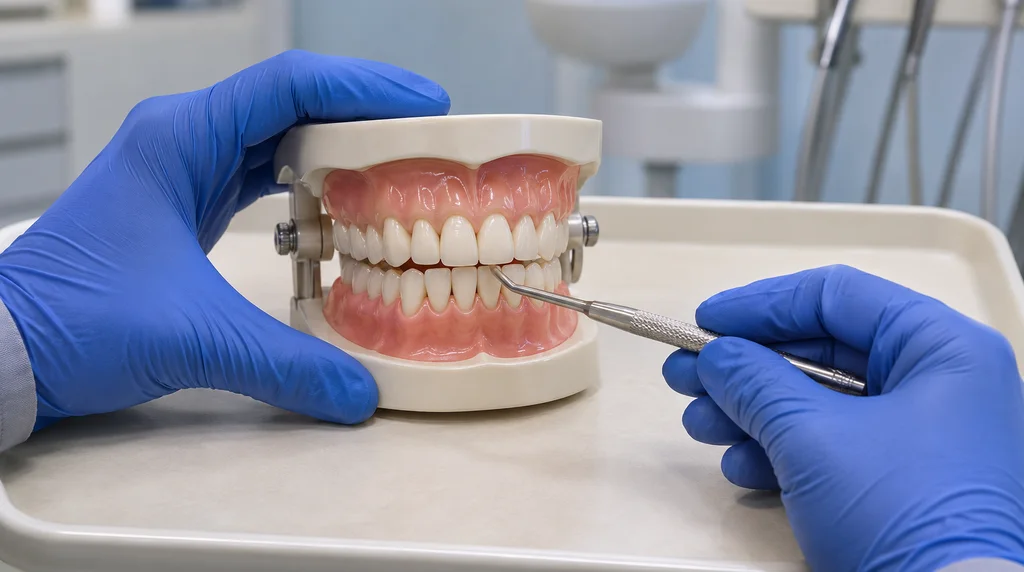
AI-generated illustrative photo. A teaching model shows where a dentist looks when examining the bite.
Braces can improve some adult underbites. A dentist will first check whether the bite comes mainly from the position of the teeth, the relationship between the jaws, or a mix of both. That distinction helps establish what braces or aligners can achieve and whether a jaw surgery assessment is worth discussing. In children, the dentist also considers how the teeth are coming through and how the jaws are growing.
What is an underbite?
In an underbite, the lower front teeth bite in front of the upper front teeth when you bring your teeth together. Some people find it harder to bite through food with their front teeth. Others first learn about the bite at a dental check-up. In some cases, the way the teeth meet can also contribute to tooth wear.
When the upper front teeth tilt inwards or the lower front teeth tilt forwards, the result can be a dental underbite. A skeletal underbite involves the relative position of the jaws, such as an upper jaw that sits further back or a lower jaw that sits further forwards. Both factors can be present in the same person. A dentist will also look for a forward shift of the lower jaw as you close. A profile photo can show what you have noticed, but an examination helps identify the cause.
What happens at the first bite assessment?
Think about when you first noticed the bite, whether it makes it hard to bite into food and whether you have had orthodontic treatment before. Bring previous orthodontic records or dental images if you already have them.
- Talk through what you have noticed.
The dentist asks about everyday biting, when you first noticed the bite and any previous orthodontic or dental treatment. - Examine the bite and oral health.
The dentist checks where the teeth meet, how the lower jaw moves as you close, the relationship between the jaws and the health of the gums. For a child, this includes tooth and jaw development. Photos, a dental scan or X-rays may be taken if needed. - Discuss the options.
Ask whether the bite can be monitored, whether orthodontic treatment may help, and whether further records or a referral would be useful. The dentist can explain what each option may change.
Braces, clear aligners and jaw surgery assessment
| Option | What the dentist considers |
|---|---|
| Fixed braces | Braces move teeth to improve how they meet. This may be suitable when the underbite comes mainly from tooth position. Some adults with a small jaw discrepancy can also discuss how much improvement tooth movement alone could offer. |
| Clear aligners | Aligners also move teeth and may suit selected cases that mainly involve tooth position. Suitability depends on the movements needed, how the teeth meet and whether you can wear the aligners as directed. |
| Jaw surgery assessment | When the jaws are significantly out of position, tooth movement alone may have limited effect on the bite. After jaw growth is complete, some patients may be referred for an assessment for corrective jaw surgery, usually considered alongside orthodontics. |
Read about braces and orthodontic treatment for more on assessments and appliances. Take these three questions to your first visit.
- Does my underbite come mainly from the position of my teeth, my jaws or both?
- What could each option improve, and what would its limits be?
- Do I need further tests, a review or a referral?
When should a child with an underbite see a dentist?
If a child’s front teeth start to bite in reverse as teeth come through, arrange an examination when you notice it. The dentist can check tooth position, whether the lower jaw shifts on closing and how the jaws are developing. Some children are monitored. Others may be offered an appliance while they are still growing.
A Cochrane review found that early non-surgical treatment can improve the bite and jaw relationship in some children in the short term. Evidence is more limited on how long the improvement lasts and whether it changes the need for surgery later. A first assessment helps you understand what your child needs now.
Is it too late to assess an underbite as an adult?
Adults can still be assessed for orthodontic treatment. The dentist will consider tooth and gum health, the relationship between the jaws and what you would like to improve, such as biting into food. If jaw position is a major factor, ask how much improvement tooth movement could offer and what a referral would involve.
Frequently asked questions
Can a mild underbite be left alone?
Ask a dentist if monitoring is suitable. They will consider how the front teeth meet, whether the bite affects eating or is associated with tooth wear, and whether the jaws are still growing. If the bite changes or eating becomes difficult, ask about an earlier review.
Will an underbite go away on its own? Can exercises fix it?
Bite changes can occur as teeth come through and the jaws develop. Appearance alone gives little indication of how the bite will develop. If the front teeth already bite in reverse, ask a dentist what to monitor and when to return. Tongue exercises, applying pressure to the teeth or buying aligners yourself cannot replace assessment and a treatment plan.
Can clear aligners fix an underbite?
Clear aligners may be an option when the underbite is mainly due to tooth position. If the relationship between the jaws is the main cause, an assessment can show how much tooth movement alone might improve the bite.
Does an underbite always need extractions or surgery?
Some cases can be managed without either. Extraction decisions take into account tooth alignment, space and the planned movements. A surgical assessment depends on the difference between the jaws and the intended improvement in bite function. Both decisions follow an examination.
How long does underbite treatment take?
Timing depends on the complexity of the bite, the appliance and whether treatment has several stages. After an examination, ask for an individual estimate, a follow-up schedule and what could affect the timing.
What does underbite correction cost in Hong Kong?
Fees depend on the assessment and treatment plan. After your consultation, ask whether the quote covers records, appliances, follow-up visits and retainers. Ask about separate fees if you are referred. Actual fees are confirmed after consultation. You can also read the DDG dental fee reference.
Can an underbite come back after braces?
Teeth can move after orthodontic treatment. Retainers help hold them in position. Follow the wear and review schedule recommended for you. If your bite changes after previous treatment, bring your old records to a review if you have them.